

Journals of Joy
A collection of stories and reflections on living with intention in a digital world. From classrooms to communities, these voices share what it means to choose joy over distraction.
Discover stories that inspire balance, purpose, and digital well-being.
Join the Spring 2024 Digital Well-Being Challenge Cohort
We invite you to join our Spring 2024 Digital Well-Being Challenge Cohort. Students struggle with tech over-use, and healthy boundaries matter. Our 4-week challenge gives your school a ready-to-run program: weekly themes like focus, relationships, campus life and brain-breaks, plus training, assessment tools and live kickoff sessions. Get your campus on the map this spring.

Strategies to Improve Digital Well-Being in the University Environment — JOMO Campus at NASPA 2024
At NASPA 2024 we’ll explore how universities can move beyond mere tool-kits and device bans to build a holistic digital-well-being strategy—one that empowers students and staff to think critically about tech use, create meaningful boundaries, and cultivate a campus culture of presence and purpose.
Digital Well-being in the Classroom
At a pilot initiative, instructor-led slides and short videos highlighted how multitasking can cost up to 40 % of productivity, and how even students watching a multitasker scored 17 % lower on comprehension. By supplying faculty with this research-based content, the programme sparked reflection on digital intentions and boundaries in classroom culture.

Three Moving Targets: Insights from Harvard’s Digital Wellness Lab
At a pilot initiative, instructor-led slides and short videos highlighted how multitasking can cost up to 40 % of productivity, and how even students watching a multitasker scored 17 % lower on comprehension. By supplying faculty with this research-based content, the programme sparked reflection on digital intentions and boundaries in classroom culture.

10 Tips for a Digitally Well Campus
Digital wellness is a positive state of mental, physical and social-emotional health achieved through intentional, authentic and balanced engagement with technology and interactive media.

Making space for human connection makes space for more joy
Truly good conversation isn’t just about talking—it’s about being present, asking curious questions, and listening with intention. These three keys open space for connection, understanding and trust—especially in a world full of distractions.
Students are ready. Are we?
As students return to campus, many are seeking balance in a world of constant connection. With UNESCO calling for global smartphone bans and universities rethinking tech policies, JOMO(campus) helps institutions design evidence-based digital wellness programs that foster focus, connection, and joy—both online and off.
Is a cell phone ban really the answer?
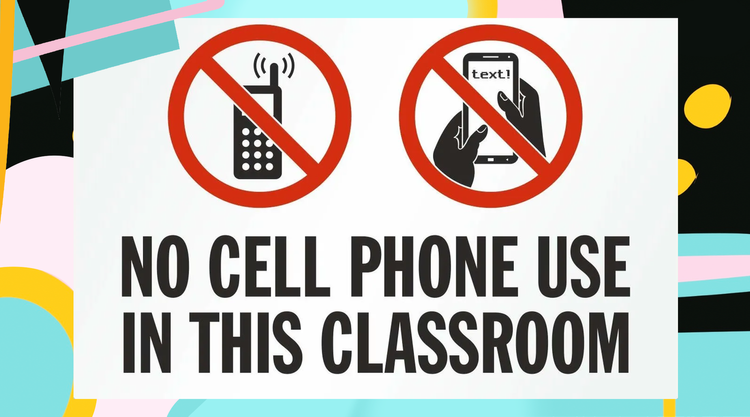
In Ontario and the Netherlands, phone bans in classrooms are gaining traction—but does banning the device truly address the deeper issue? The reality: phones can be powerful tools for connection and learning, yet they’re often designed to distract. Rather than simply eliminate the device, the key is creating conditions where intentional use, focus and meaning can thrive.

How we work with you
We partner with your institution in four phases: survey & interview to establish a baseline, kick-off digital-wellness education for students and staff, run a 4-week challenge, and provide ongoing resources to build a thriving campus culture.
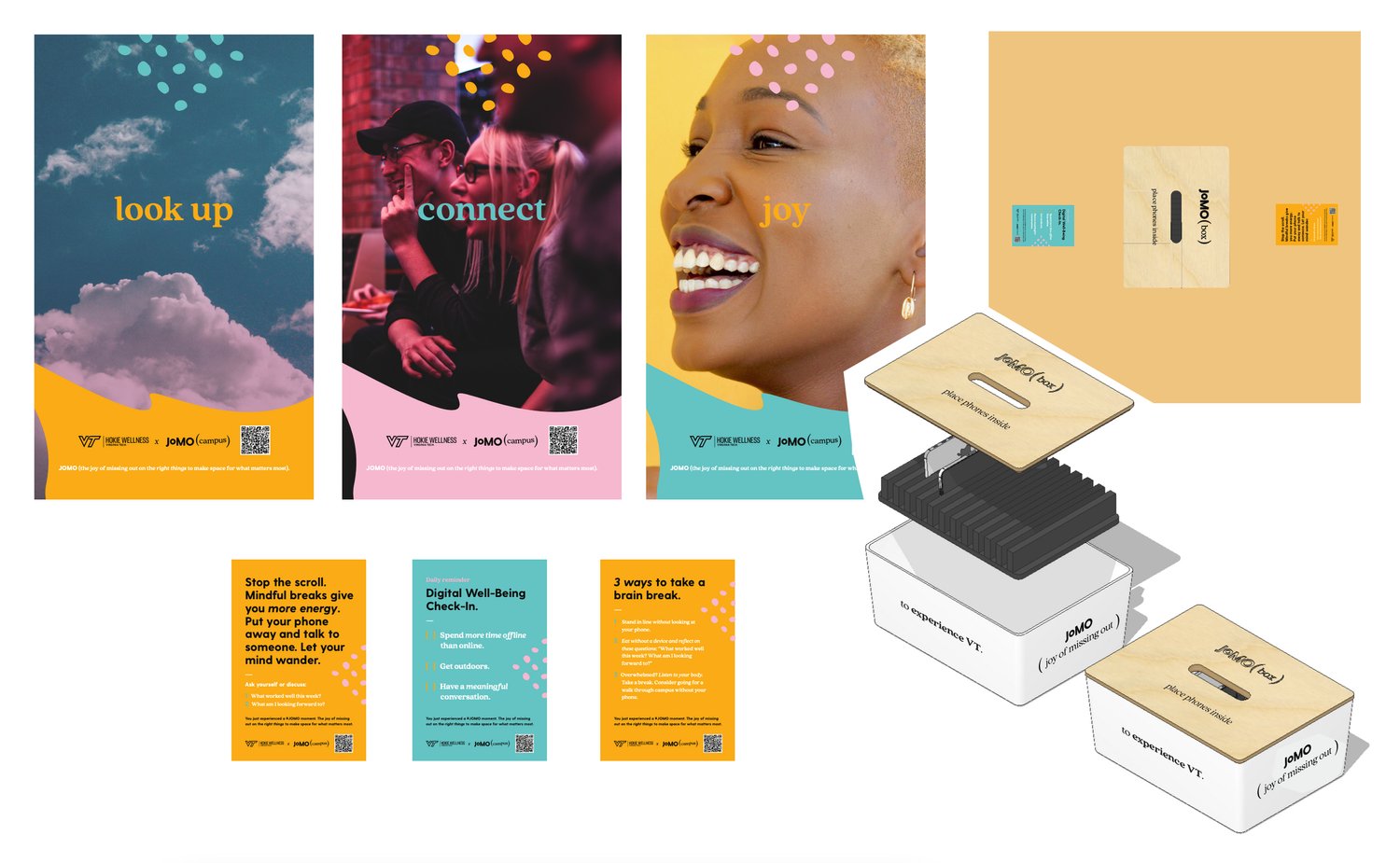
Transforming campus culture through common rooms
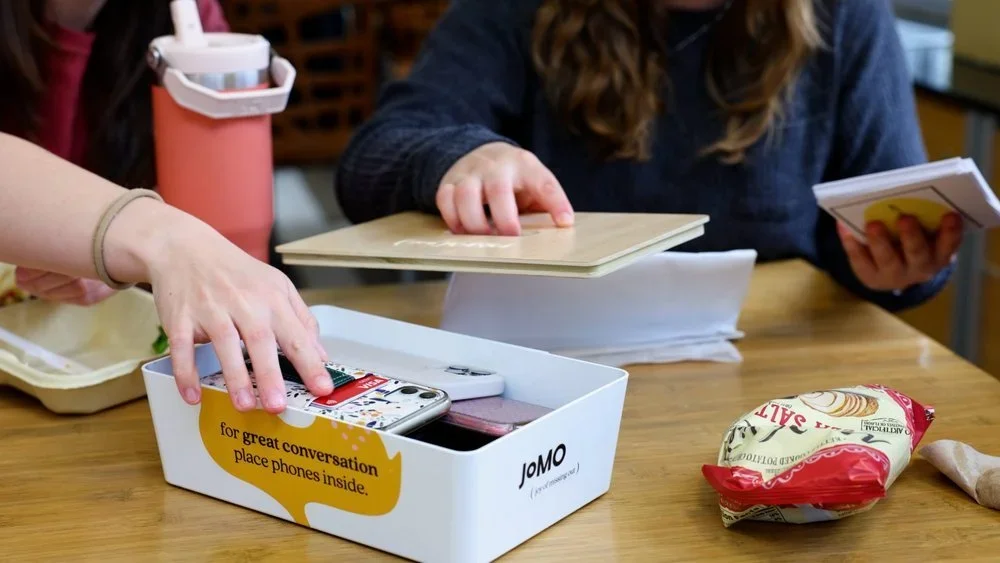
At one pilot initiative, phone-boxes and conversation cards placed in a major university common area created space for students to unplug, engage deeply, and reclaim their presence. The experiment helped build new norms by making it socially acceptable—not just possible—to set phones aside and focus on face-to-face connection.
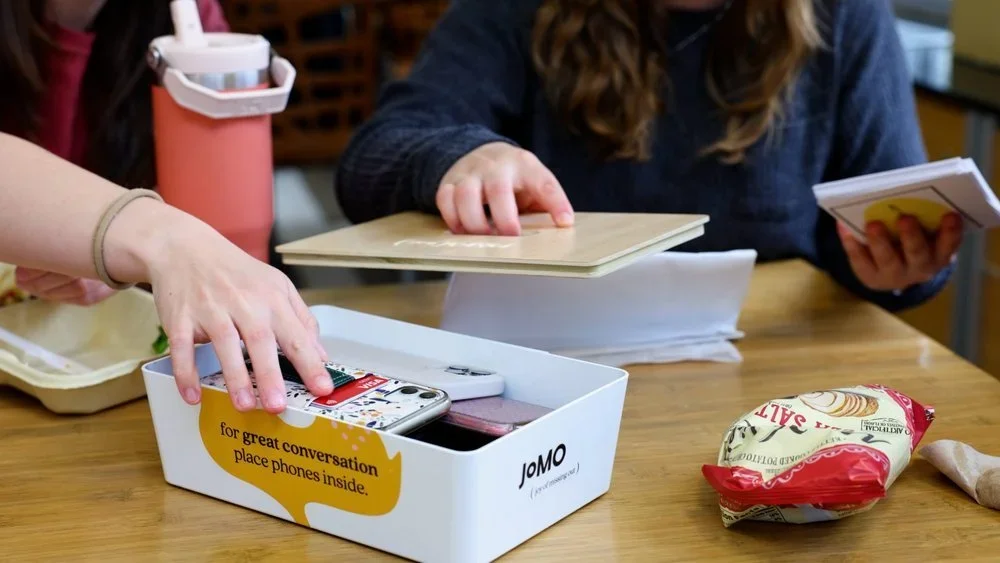
The smallest change can have the biggest impact
Small changes can lead to big gains—one student found that just tweaking a minor digital habit freed up meaningful time and space. JOMO(campus) focuses on these simple shifts to help students reclaim focus, presence and joy.

Our layered approach is working
At one pilot initiative at Virginia Tech, a multi-phase rollout brought together classroom lessons, residential challenges and phone-‘boxes’. The results are strong: 73.8% of students adopted new digital-well-being practices, over half used the JOMO (box) station in the dining hall, and the campus was named the world’s first ‘Digitally Well University’. Our layered approach — aligning curriculum, environment and habits — is working to shift culture.
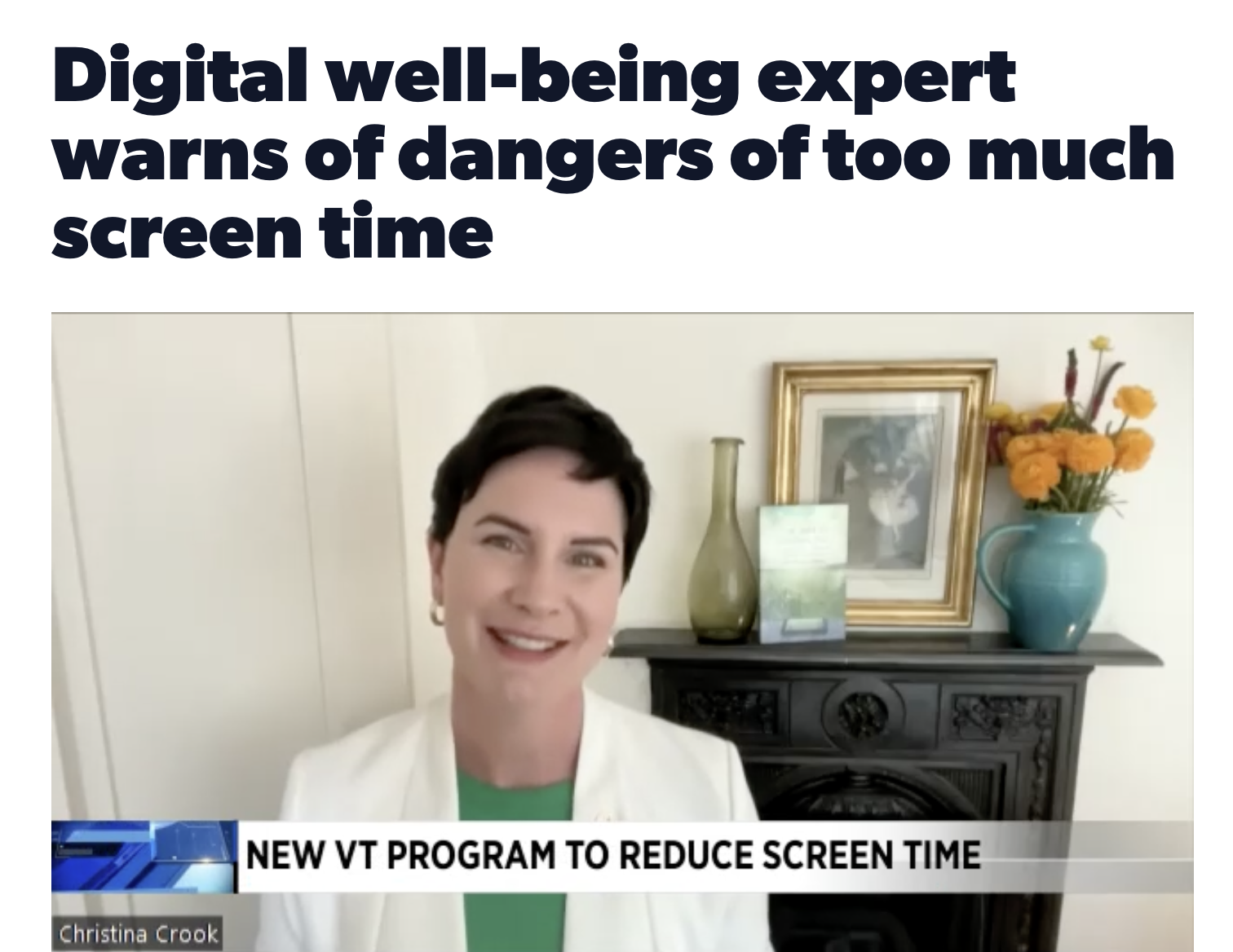
Fox News — New Digital Well-Being Program to Reduce Screentime and Boost Connection
JOMO Campus founder Christina Crook is sounding the alarm on the mental-health impacts of excessive screen time. With smartphone and social-media use linked to anxiety, depression, and loneliness, she encourages families to start small—turn off notifications, put phones away during gatherings, and rebuild real connection one moment at a time.

CBS News — New JOMO(campus) Program Increases Mindful Tech Use
Digital-well-being expert Christina Crook highlights how campuses like Virginia Tech are embracing culture change—not just banning phones, but teaching students how to use tech with intention. Small shifts lead to big impact.
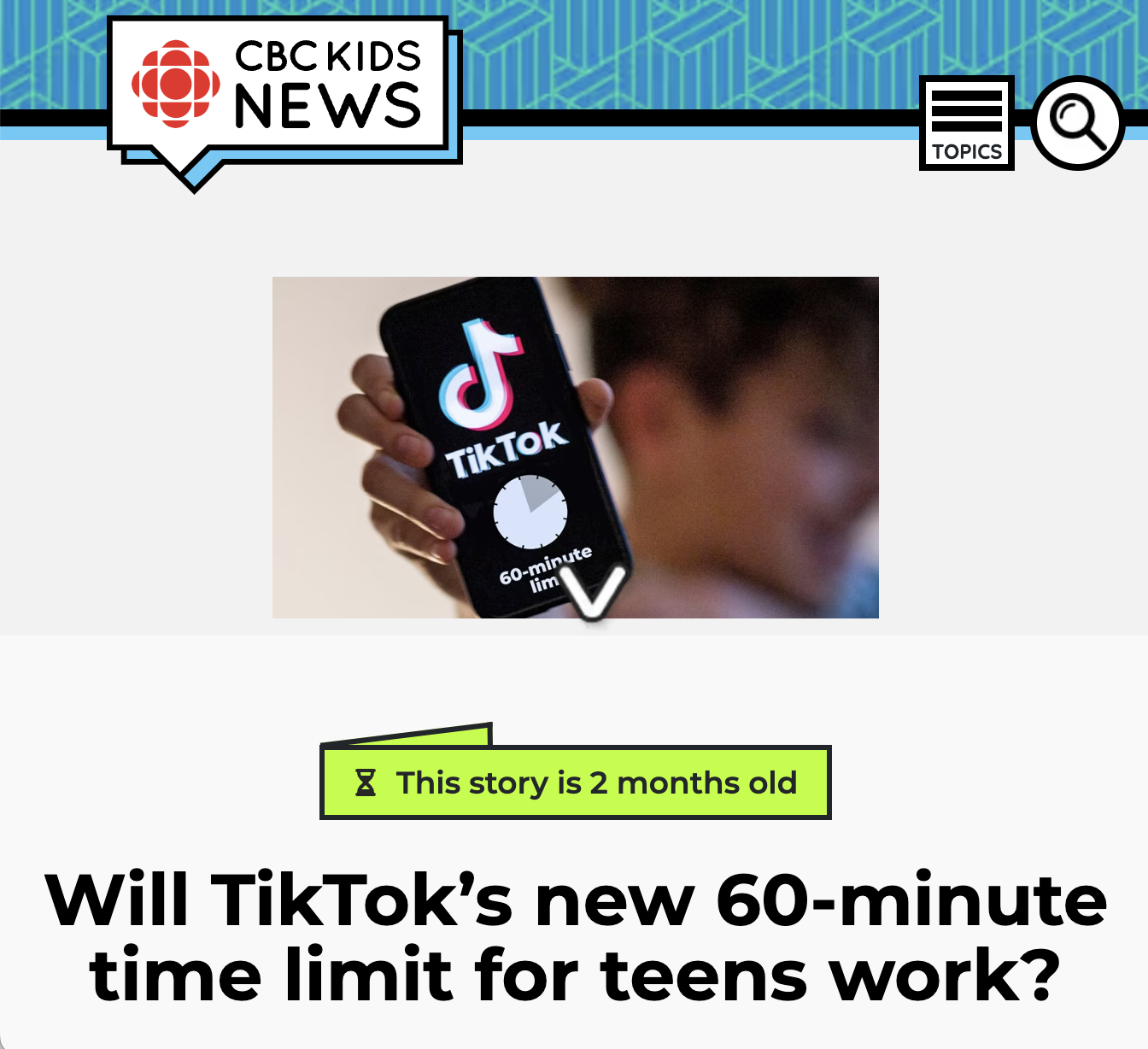
CBC News —TikTok Time Limits Too Little, Too Late
In partnership with CBC, JOMO Campus CEO Christina Crook addresses how platforms like TikTok shape youth behaviour—and why building mindful, balanced tech-habits matters more than ever.
Get a Free Resource
It all begins with an idea. Maybe you want to launch a business. Maybe you want to turn a hobby into something more. Or maybe you have a creative project to share with the world. Whatever it is, the way you tell your story online can make all the difference.