Why Schools Need Digital Formation, Not Just Filters
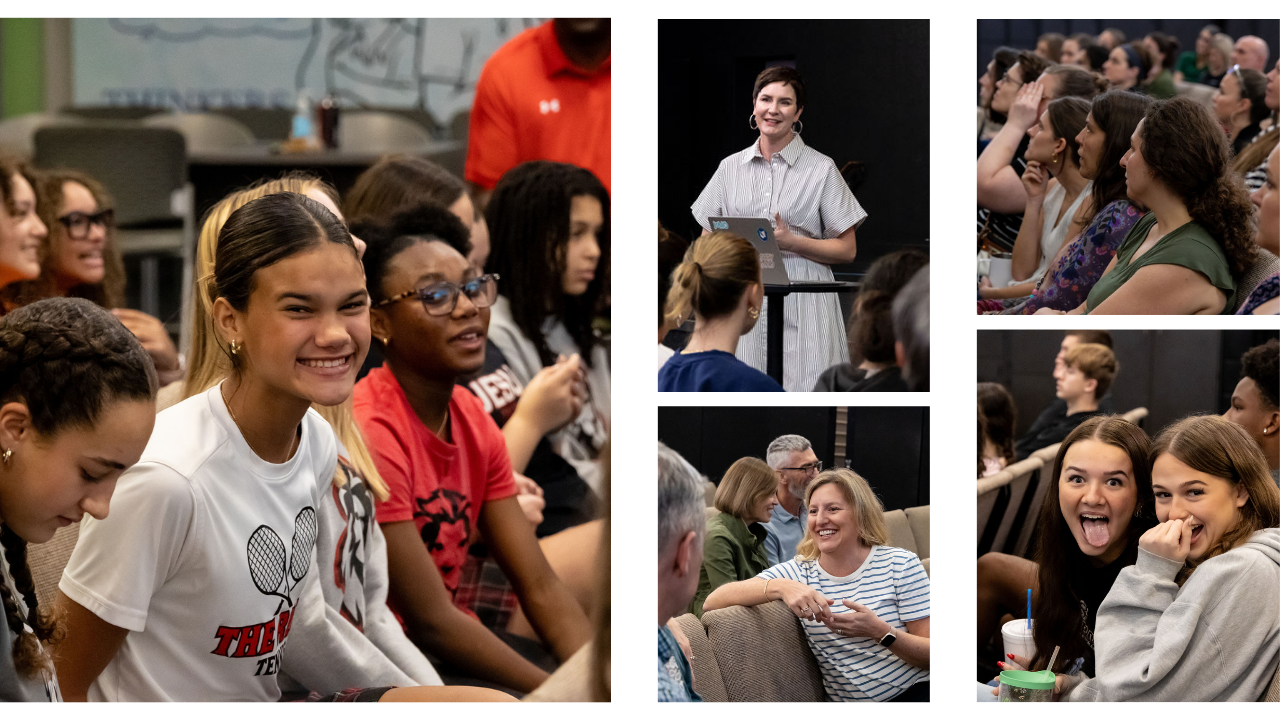
Photos provided by The Rock School
For years, digital wellness in Christian schools meant one thing: keep kids away from the bad stuff. Filters. Monitoring software. Blocking explicit content and cyberbullying. Those tools matter, and I've advocated for them. But I kept feeling a nagging tension that something else was needed.
The damage I was watching wasn't only exposure to harmful content. It was more subtle. I saw students who couldn't sit through a class period without reaching for a phone. Kids who couldn't tolerate a moment of boredom. And honestly, I saw the same thing in the adults in the buildings, too.
Excessive screen time isn't nefarious the way pornography is nefarious. It doesn't announce itself. It just slowly hollows out the capacity to be still, to be present, to be alone with your own thoughts. And that capacity, it turns out, is where the spiritual life actually lives.
Blaise Pascal, writing in the seventeenth century, said it this way: "All of humanity's problems stem from man's inability to sit quietly in a room alone." Our phones have made that inability nearly total. And in doing so, they are forming our children in ways no filter can prevent.
It’s not a content problem. It's a formation problem.
"Half measures won't work. We need formation, not just filters." — Christina Crook, founder of JOMO(campus)
What I saw at The Rock School
Over the past year, I've gotten to know the team behind JOMO, which stands for the Joy of Missing Out. I recently watched them launch their program at The Rock School, where my kids attend. What I saw wasn't a digital safety presentation. It was closer to a spiritual reckoning.
JOMO(campus) is a fully integrated program for Christian schools, bringing students, staff, and families into a shared framework for healthier, more intentional technology use. What sets it apart from anything else I've seen in this space is the question it starts with. Not "What are we protecting kids from?" but "Who are they becoming?"
That reframe changes everything.
The curriculum is built on Scripture and a Christian vision of human flourishing. Students wrestle with real questions: Who am I becoming in the digital age? What kind of person do I want my habits to form me into? These aren't questions a filter can ask. They require a community, a language, and a framework. JOMO provides all three.
It's also genuinely student-centered, which is rarer than it sounds. A lot of digital wellness work aims almost entirely at parents. JOMO includes families and staff, but it puts real weight on equipping students themselves, with discernment and agency, not just compliance. Students who understand why healthy habits matter are far more likely to carry them past graduation.
Schools that have gone through the program report more face-to-face connection and shared experiences during lunchtime and breaks, more engaged classrooms, and a shared vocabulary around technology use that stretches from the classroom into the home.
How it's changing things at home
Watching JOMO work at school prompted some honesty and introspection about my own habits. I started using the Brick app to model more responsible phone use for my kids, because I knew I couldn't ask them to do something I wasn't willing to do myself. Modeling matters, maybe more than any policy.
The bigger change has been language. JOMO gives our family simple, low-friction ways to name what's happening when someone reaches for a device out of habit rather than intention. It doesn't feel like policing. It feels like a shared reminder of who we're trying to be.
Case in point: My wife pulled out her phone at the dinner table to share something, and our fifteen-year-old son, without missing a beat, said, "Mom, that's not JOMO." I laughed. And I felt something like hope. That's not a rule he was following. That's a value he'd absorbed.
I carry a lot of low-grade worry about my kids and technology. JOMO hasn't made that worry disappear. But it has given me the quiet confidence that my kids are being equipped to navigate this with wisdom.
What's actually at stake
I want to say something directly to my fellow Christian school leaders: this is a spiritual issue.
Pascal's warning about our inability to sit alone is, at its root, a warning about the soul. The contemplative stillness that prayer, Scripture, silence, and Sabbath require isn't a spiritual luxury. It's the ground in which our awareness of God grows. When students can't sustain attention, can't tolerate boredom, can't be present without a screen, we are not just looking at a productivity problem. We are looking at souls that are malnourished.
We forget who we are. We forget whose we are.
Digital formation belongs at the center of the discipleship conversation, alongside chapel, Scripture, and community. Because the question of who our students are becoming is inseparable from where they're spending their attention.
We become what we behold.
An invitation
If your staff is weary from the daily battle over devices, or if you're watching anxiety, distraction, and disconnection rise among your students, I'd encourage you to take a closer look at JOMO(campus).
Christina Crook and her team are doing serious, kingdom-aligned work. This is one of the few things in the digital wellness space that speaks the same language as the mission of Christian education.
Book a discovery call with Christina and see for yourself.
About the Author
Jim McKenzie is a parent of kids attending The Rock School, a former Head of School, and currently works as a consultant, speaker, and advocate for Christian education including partnerships with organizations like Summit Ministries and the Herzog Foundation. He lives with his wife Hannah and their children in Gainesville, Florida, and is grateful for how JOMO has shown up at his own dinner table.